 Contact
 Support
 Wishlist
 Home
Home Categories
 PHP Script
 WP Themes
 WP Plugins
 66Biolinks Plugins
 Tutorial
 Important Links
 Hosting
 Services
 Request Item
 My account
Tech
Self-Hosted Tools vs API-Based Tools: Which Is Better?
Jan
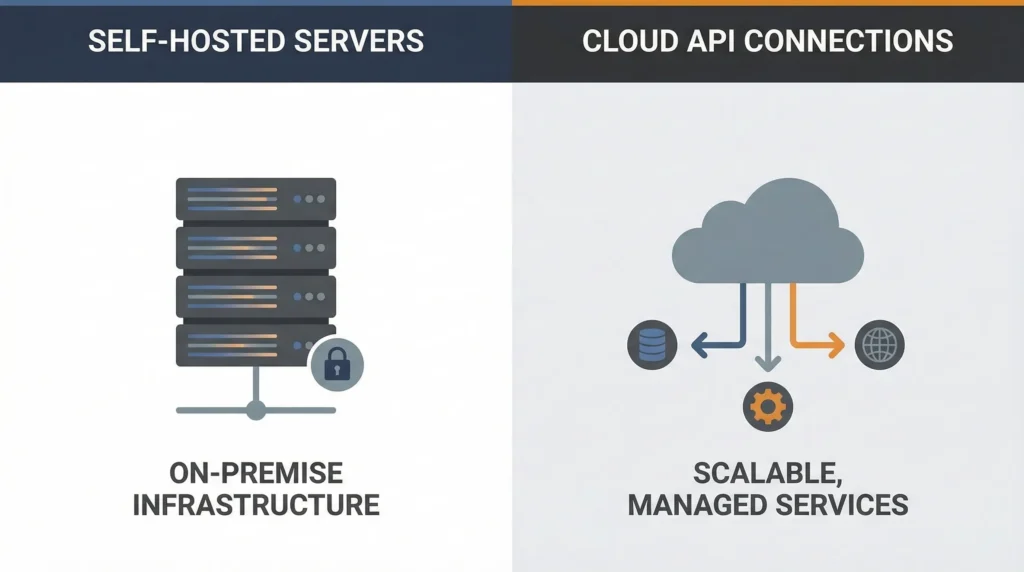
Choosing the right tools is a common challenge for developers, founders, and digital businesses. Should you self-host tools on your own server or rely on API-based tools provided by third-party platforms? Each option solves the same problem—delivering functionality—but in very different ways. The right choice can impact your costs, performance, scalability, privacy, and long-term growth. In this guide, we’ll clearly explain how self-hosted tools and API-based tools work, compare their pros and cons, and help you decide which option fits your use case best.
What Are Self-Hosted Tools?
Self-hosted tools are applications that you install and run on your own server or hosting environment. You control the code, data, updates, and infrastructure.
For example, if you run utilities like a PDF compressor, QR code generator, or hash generator directly on your server, you are using a self-hosted approach. Platforms like Toolszu provide several tools that follow this model, such as an online MD5 generator or PDF encryption tools that work without relying on external APIs.
Key Characteristics of Self-Hosted Tools
- Full control over data and processing
- Runs on your own hosting or cloud server
- No per-request or usage-based API fees
- Customizable to your needs
What Are API-Based Tools?
API-based tools rely on third-party services. Your application sends requests to an external API, and the provider processes the data and returns the result.
For example, when a website uses an external API to generate QR codes, shorten URLs, or convert files, all processing happens on the provider’s servers—not yours.
Key Characteristics of API-Based Tools
- Minimal setup and faster integration
- Managed infrastructure and updates
- Usage-based pricing (often per request)
- Dependence on third-party uptime and limits
Self-Hosted Tools: Pros and Cons
Advantages of Self-Hosted Tools
1. Better Data Privacy
Sensitive files, hashes, or documents never leave your server. This is especially important for tools like PDF encryption, password hashing, or file processing.
2. Long-Term Cost Efficiency
Once deployed, there are no per-request fees. High-traffic tools often become cheaper over time compared to API pricing.
3. Full Customization
You can modify features, UI, limits, and workflows. This is ideal for platforms building a unique tool ecosystem.
4. No Vendor Lock-In
You’re not tied to a single provider’s pricing changes or API restrictions.
Disadvantages of Self-Hosted Tools
- Requires server resources and maintenance
- Scaling traffic needs proper infrastructure planning
- Security updates are your responsibility
API-Based Tools: Pros and Cons
Advantages of API-Based Tools
1. Faster to Launch
You can integrate powerful features in minutes without building everything from scratch.
2. No Server Maintenance
The provider handles uptime, scaling, and updates.
3. Easy Scalability (Initially)
APIs can handle spikes without manual infrastructure changes.
Disadvantages of API-Based Tools
- Recurring costs increase with usage
- Rate limits can block growth
- Downtime or policy changes are out of your control
- Sensitive data is sent to third-party servers
Performance and Reliability Comparison
Self-hosted tools often deliver faster response times because there’s no external API round-trip. Tools like local PDF compression or hash generation run instantly on your server.
API-based tools depend on network latency and provider availability. Even large providers experience outages, as documented by platforms like Cloudflare and AWS.
If uptime and speed are business-critical, self-hosting offers more predictable performance.
SEO and Product Strategy Impact
If you’re building an SEO-focused platform or tool directory, self-hosted tools provide a major advantage.
Search engines favor:
- Fast page load times
- Consistent uptime
- Tools that work without third-party dependencies
For example, hosting tools like a QR code generator or password hashing utility directly on your domain improves crawlability, indexing, and user trust.
You can see this approach in action across Toolszu’s online utilities, where tools load quickly and work without external API calls.
When Should You Choose Self-Hosted Tools?
Self-hosted tools are the better choice if:
- You expect high or growing traffic
- Data privacy matters
- You want full control and customization
- You’re building a long-term SaaS or tool platform
They’re especially suitable for document tools, security utilities, and SEO tools.
When Are API-Based Tools a Better Fit?
API-based tools make sense if:
- You need to launch quickly
- Traffic is low or unpredictable
- You lack server management resources
- The feature is non-critical
For MVPs and internal tools, APIs can be a practical short-term solution.
FAQs: Self-Hosted Tools vs API-Based Tools
Which option is cheaper in the long run?
Self-hosted tools are usually cheaper at scale because there are no per-request fees after setup.
Are self-hosted tools more secure?
They can be more secure since data stays on your server, but only if you maintain proper security practices.
Do API-based tools affect website speed?
Yes. External API calls add latency and depend on the provider’s uptime.
Can I switch from API-based to self-hosted later?
Yes, but it may require redevelopment. Planning early helps avoid migration issues.
Are self-hosted tools harder to maintain?
They require maintenance, but modern hosting and automation tools make this manageable.
Conclusion: Which Is Better?
There’s no one-size-fits-all answer. API-based tools are excellent for speed and simplicity, while self-hosted tools win on control, privacy, cost efficiency, and long-term scalability.
If you’re building a serious platform, investing in self-hosted tools gives you independence and stability. Explore how self-hosted utilities can power your projects by using reliable, fast tools built for long-term growth—and choose the approach that aligns with your business goals.
